Are Brahma, Vishnu, and Shiva Mortal?
 Minutes to read.
Are Brahma, Vishnu, and Shiva Mortal? The Quick 2-Minute Guide
A near-universal belief in mainstream traditions is that the Hindu Trinity—Lord Brahma, Lord Vishnu, and Lord Shiva—are absolutely immortal (Amar) and exist completely outside the boundaries of birth and death.
However, when you transcend popular folklore and examine the root scriptures, a very different cosmic reality is revealed. By looking strictly at the direct declarations in the Shrimad Devi Bhagwat Purana and the structural timeline of the Shiva Purana (Rudra Samhita), we find definitive proof that the Trimurti are macro-cosmically bound by cyclic manifestation and ultimate dissolution.
Here is the quick, undeniable scriptural proof.
1. The Direct Confession: "Aavirbhaav" and "Tirobhaav"
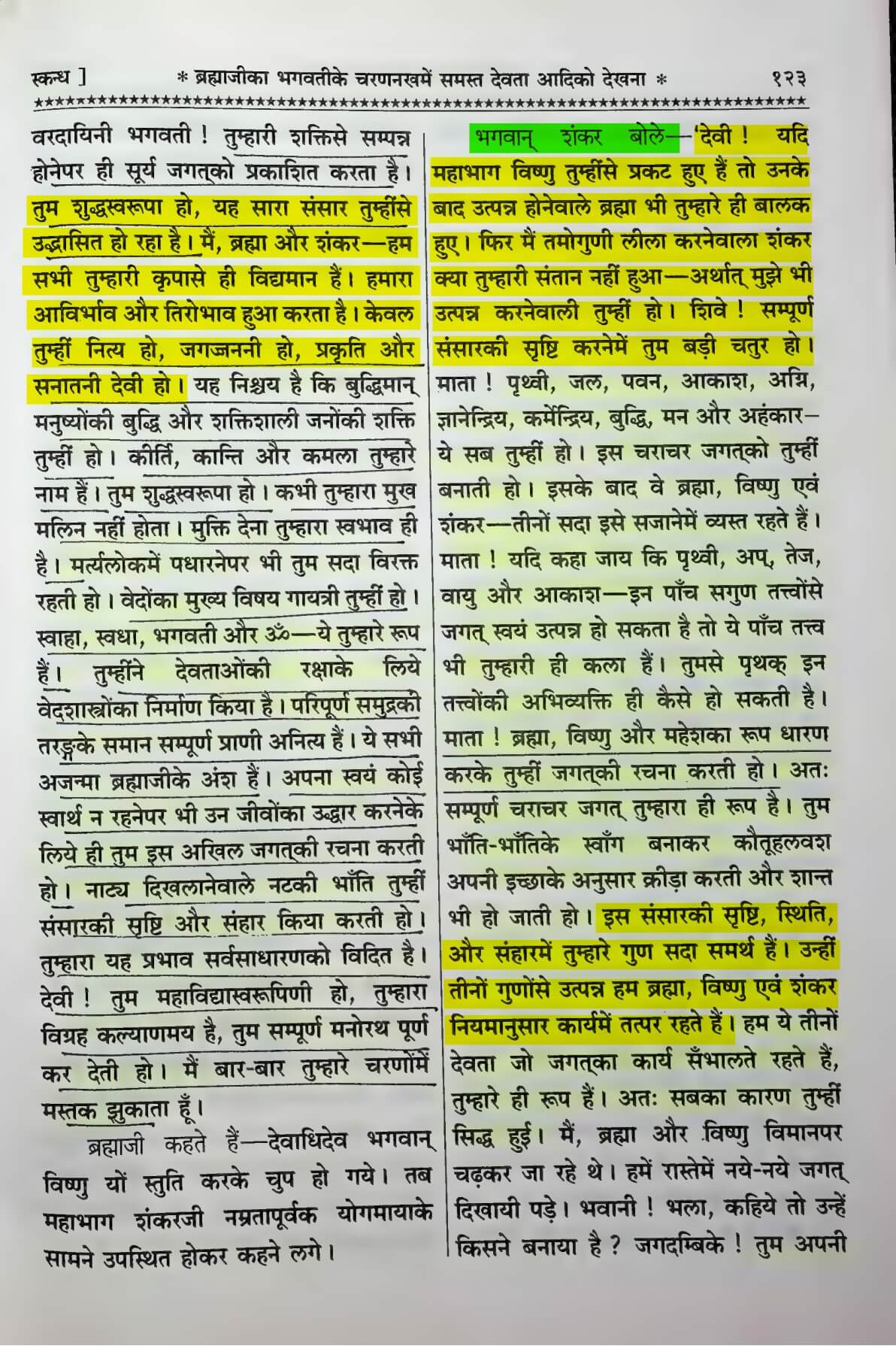
We do not need to guess about the mortality of the Trimurti, because the deities openly testify to it themselves. In the Shrimad Devi Bhagwat Purana (Skandha 3), while offering a joint prayer to the supreme Goddess, the Trimurti explicitly declare:
"Hamara aavirbhaav aur tirobhaav hua karta hai. Keval tumhi nitya ho..." (Our manifestation/birth and withdrawal/death keep happening. Only you are eternal...)
By using the precise terms Aavirbhaav (appearing/manifesting into form) and Tirobhaav (disappearing/withdrawing from existence), the Trimurti confirm that their physical forms are governed by a cosmic clock.
2. Lord Shiva Confirms They Are "Created"
On the very same page, Lord Shiva completely demystifies his own immortality by addressing the Goddess directly:
"Goddess! If Vishnu has manifested from you, then Brahma is also your child. Then, am I... not your son? Meaning, I am also created by you."
In Vedic philosophy, anything that has a documented birth must logically have a documented point of conclusion. By identifying themselves as children who are born, they inherently reveal their finite nature.
3. The Structural Lifespan in the Shiva Purana
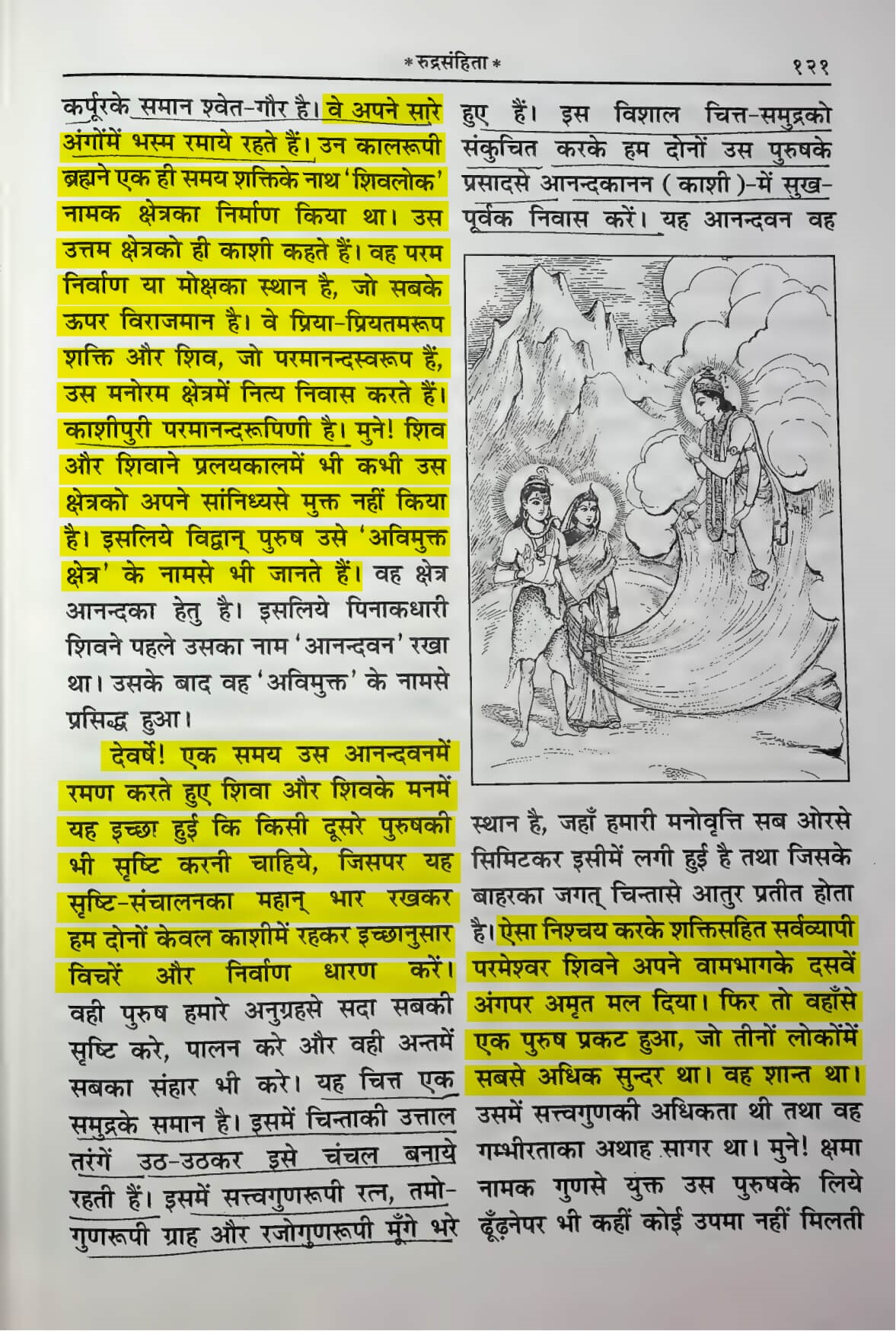
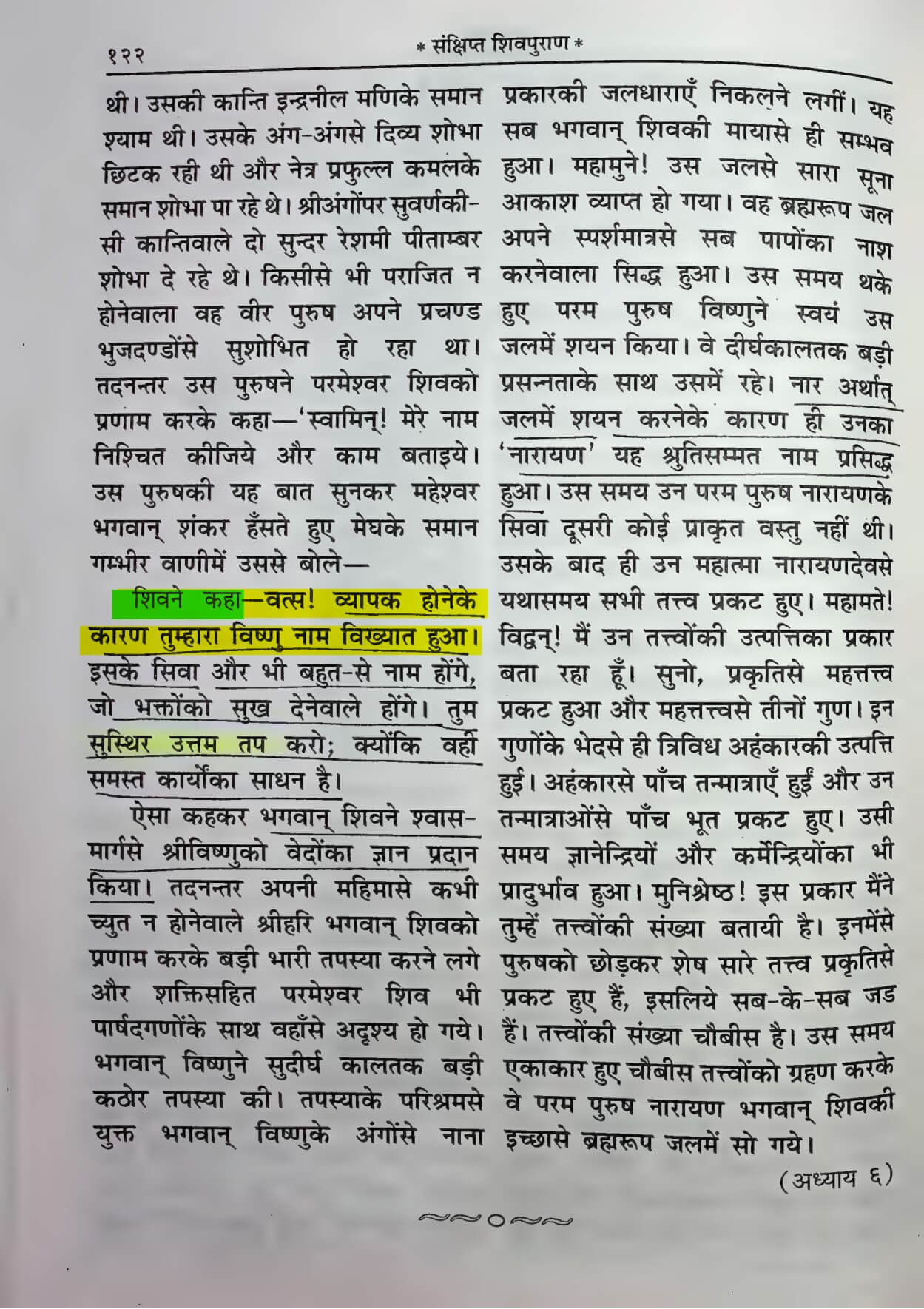
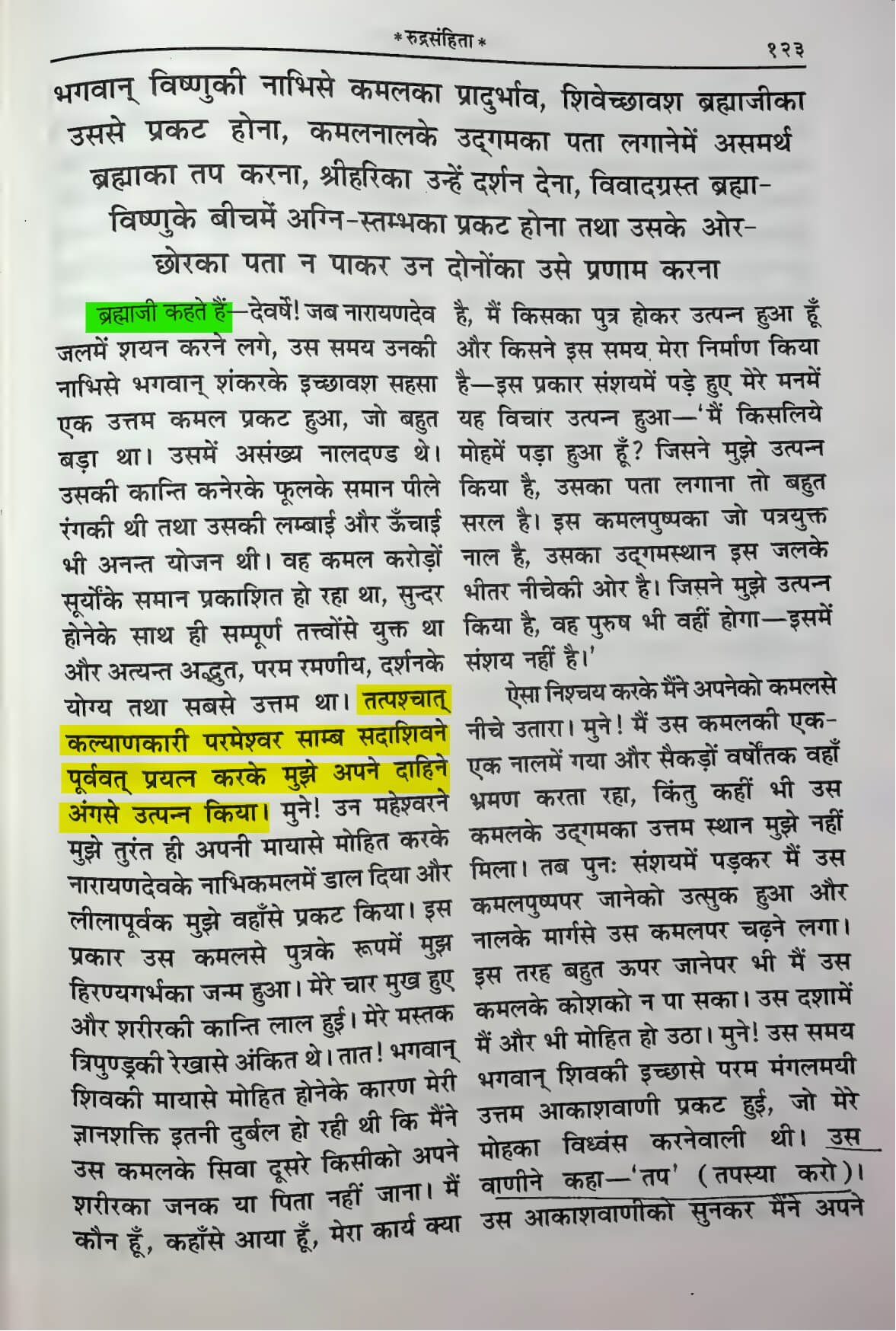
Chapter 6 of the Shiva Purana (Rudra Samhita) outlines the exact mechanism behind this cyclic mortality:
- The Beginning: The Trimurti are brought forth sequentially by their original cosmic parents, Lord Sadashiva and Goddess Durga (Ambika/Prakriti). Vishnu is manifested from Sadashiva's left side, and Brahma from his right side.
- The End (Mahapralaya): When the macro-cosmic timeline reaches its conclusion, a Great Dissolution takes place. The current Brahma, Vishnu, and Shiva finish their designated administrative lifespans, undergo Tirobhaav, and their energies are completely pulled back and dissolved into the bodies of their parents. They remain unmanifest until the next creation cycle begins.
⚡ Fast Facts Summary
| The Deity | Their Cosmic Reality | Scriptural Evidence |
|---|---|---|
| Brahma, Vishnu, & Shiva | Macro-cosmically Mortal. They undergo cyclic birth (Aavirbhaav) and dissolution (Tirobhaav). | shrimad-devi-bhagwat-page123-full.jpg |
| Lord Sadashiva & Goddess Durga | Absolutely Eternal (Nitya). They are the primordial parents who survive the collapse of the universes. | shrimad-devi-bhagwat-page119.jpg & page123-full.jpg |
Conclusion
While popular folklore addresses the Trimurti as immortal because they live for billions of human years, the root texts of Hinduism settle the debate completely. Lord Brahma, Lord Vishnu, and Lord Shiva are highly powerful administrative deities, but they are ultimately mortal. They operate within fixed cyclic lifespans under the absolute, eternal authority of their parents, Lord Sadashiva and Goddess Durga.
Evidence - Shrimad Devi Bhagwat Puran
Shiv Puran