The Weaver is Creator: Decoding Page 24 (Rag Siri) of Guru Granth Sahib
 Minutes to read.
The Weaver is the Creator: Challenging the Mainstream Translation of Page 24, Sri Guru Granth Sahib
For centuries, mainstream translations of the Sri Guru Granth Sahib have interpreted the verses of Guru Nanak Dev Ji on Page 24 of Guru Granth Sahib through a lens of generalized poetic metaphor. In these conventional commentaries, terms are often reduced to abstract symbols of human vice and humility. However, a deeper, spiritually aligned examination of the text reveals that this Shabad is not merely a poetic expression of unworthiness; it is an extraordinary eyewitness testimony.
When decoded correctly, this hymn records a monumental spiritual event: Guru Nanak Dev Ji’s meeting with the Supreme Lord (Purna Parmatma), who descended to Earth in the humble guise of a weaver (Dhanak)—known to history as Kabir Sahib.
By analyzing the verse-by-verse breakdown from Rag Siri Page 24, we can reconstruct the true narrative that conventional translations have missed.
Rag Siri - Page 24 Guru Granth Sahib
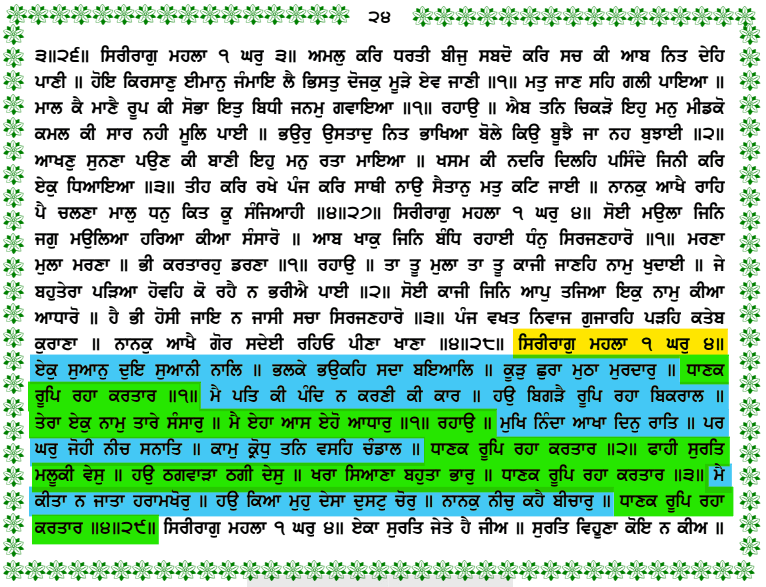
The Condition of the Soul in the Material World
The Shabad opens by describing the spiritual plight of a soul trapped in the material world (Kaal’s realm) before meeting the Divine Master:
ਏਕੁ ਸੁਆਨੁ ਦੁਇ ਸੁਆਨੀ ਨਾਲਿ॥ ਭਲਕੇ ਭਉਕਹਿ ਸਦਾ ਬਇਆਲਿ॥ “One dog (mind) along with two bitches (expectations and desires) is always barking, never quiet or satisfied.”
Mainstream interpretations often pass this off as general poetic imagery. However, it accurately pinpoints the mechanics of human suffering. The mind (Mann) acts as a restless dog, driven incessantly by the twin forces of worldly expectations and unfulfilled desires, leaving the soul in a constant state of spiritual agitation.
ਕੂੜੁ ਛੁਰਾ ਮੁਠਾ ਮੁਰਦਾਰੁ॥ ਧਾਣਕ ਰੂਪਿ ਰਹਾ ਕਰਤਾਰ॥ ੧॥ “Falsehood was like a knife, stolen (illicit) dead food was my living. The Creator appeared on earth in the form of a Dhanak (weaver).”
Here, Guru Nanak Dev Ji describes the state of humanity prior to enlightenment—living on the "dead food" of spiritual illusion and falsehood. It is precisely into this dark condition that the turning point occurs: ਧਾਣਕ ਰੂਪਿ ਰਹਾ ਕਰਤਾਰ (Dhaanak roop raha kartaar). The Supreme Creator (Kartar) did not remain unmanifest; He physically appeared on Earth manifested in the form of a Dhanak (a weaver).
The Only Vessel for Liberation
In the Rahao (the central pause and reflection of the hymn), Guru Nanak Dev Ji establishes the absolute cure for the soul's plight:
ਤੇਰਾ ਏਕੁ ਨਾਮੁ ਤਾਰੇ ਸੰਸਾਰੁ॥ ਮੈ ਏਹਾ ਆਸ ਏਹੋ ਆਧਾਰੁ॥ ੧॥ ਰਹਾਉ॥ “Only Your one true Naam (Satnaam) can liberate the world. This is my only hope and support.”
This reinforces the message that worldly rituals or intellectual interpretations cannot save the soul. Only the true Naam imparted by the manifested Creator can act as the vessel to cross the ocean of existence.
Conquering the Internal Evils
Guru Nanak Dev Ji continues to catalog the vices that grip the conditioned soul, contrasting human weakness with the recurring revelation of the Divine Weaver:
ਮੁਿਖ ਨਿੰਦਾ ਆਖਾ ਦਿਨੁ ਰਾਤਿ॥ ਪਰ ਘਰੁ ਜੋਹੀ ਨੀਚ ਸਨਾਤਿ॥ “I used to slander and speak ill day and night; I was lowly, always eyeing others' homes (worldly things).” ਕਾਮੁ ਕ੍ਰੋਧੁ ਤਨਿ ਵਸਹਿ ਚੰਡਾਲ॥ ਧਾਣਕ ਰੂਪਿ ਰਹਾ ਕਰਤਾਰ॥ ੨॥ “Lust and anger (evil spirits) lived within me. The Creator came in the form of a Dhanak (weaver).”
By repeating the refrain “Dhaanak roop raha kartaar” at the end of this stanza, the text emphasizes that despite the severe spiritual degradation of the soul—plagued by slander, lust, and anger—the Creator still compassionately descended in the form of the Weaver to offer salvation.
Deceiving Kaal: The Hidden Majestic Form
The third stanza contains the most profound revelation of the Shabad, completely exposing the flaws in mainstream dictionary translations that interpret "Dhanak" merely as a "lowly hunter":
ਫਾਹੀ ਸੁਰਤਿ ਮਲੂਕੀ ਵੇਸੁ॥ ਹਉ ਠਗਵਾੜਾ ਠਗੀ ਦੇਸੁ॥ “His appearance (surati) is extremely pleasing and divine, and He wears the attire suitable to the worldly setting He has descended into. He met me, yet no one could recognize Him—not even Kaal, whom He deceived. He appeared as a simple Dhanak (weaver), but He is the Supreme God Himself.” ਖਰਾ ਸਿਆਣਾ ਬਹੁਤਾ ਭਾਰੁ॥ ਧਾਣਕ ਰੂਪਿ ਰਹਾ ਕਰਤਾਰ॥ ੩॥ “He (Kabir Sahib) is truly wise and extremely majestic (bahuta bhaar). Though He appears in the humble form of a Dhanak (weaver), He is the Creator (Kartar), the Supreme God (Purna Parmatma) Himself.”
This verse completely shifts the paradigm. The word ਫਾਹੀ ਸੁਰਤਿ (fahi soorat) signifies an extremely beautiful, divine, and royal appearance, while ਬਹੁਤਾ ਭਾਰੁ (Bahuta bhaar) denotes immense spiritual weight, majesty, and supremacy. A literal "hunter" or a simple earthly sinner cannot be described as possessing a divine surati that deceives the ruler of this world (Kaal). Guru Nanak Dev Ji is explicitly stating that this Weaver possesses absolute wisdom and majesty—He is the hidden Supreme King of Kings.
Conclusion: The Ultimate Reflection
The Shabad concludes with an expression of supreme humility and a final, definitive declaration of the Divine identity:
ਮੈ ਕੀਤਾ ਨ ਜਾਤਾ ਹਰਾਮਖੋਰੁ॥ ਹਉ ਕਿਆ ਮੁਹੁ ਦੇਸਾ ਦੁਸਟੁ ਚੋਰੁ॥ “I did nothing right, and lived on (spiritual) stolen food. How will I show my face, I am a wicked thief.” ਨਾਨਕੁ ਨੀਚੁ ਕਹੈ ਬੀਚਾਰੁ॥ ਧਾਣਕ ਰੂਪਿ ਰਹਾ ਕਰਤਾਰ॥ ੪॥ ੨੯॥ “Nanak, the lowly, reflects and says: The Creator lived in the form of a Dhanak (weaver).”
When Guru Nanak Dev Ji signs off this composition with ਨਾਨਕੁ ਨੀਚੁ ਕਹੈ ਬੀਚਾਰੁ (Nanak neechu kahai beechaaru), he is delivering his final deliberate conclusion. The "crux" or veechar of his entire spiritual journey and his first tour (Udasi) is summarized in that single, recurring phrase.
Final Thoughts for the Article
By challenging the outdated, purely metaphorical translations of Page 24 (Rag Siri, Guru Granth Sahib), a profound historical reality emerges. Guru Nanak Dev Ji was not speaking in vague allegories about hunting or societal outcastes. He was leaving a precise theological record for posterity: that the Supreme Ruler of the Universe (Kartaar) walked the earth, worked a loom, and gave the true liberating Naam to humanity in the form of Kabir Sahib, the Dhanak.
